
2026-10-08 · David Ramirez
Differences Between Hail and Wind Damage Claims on Houston Roofs
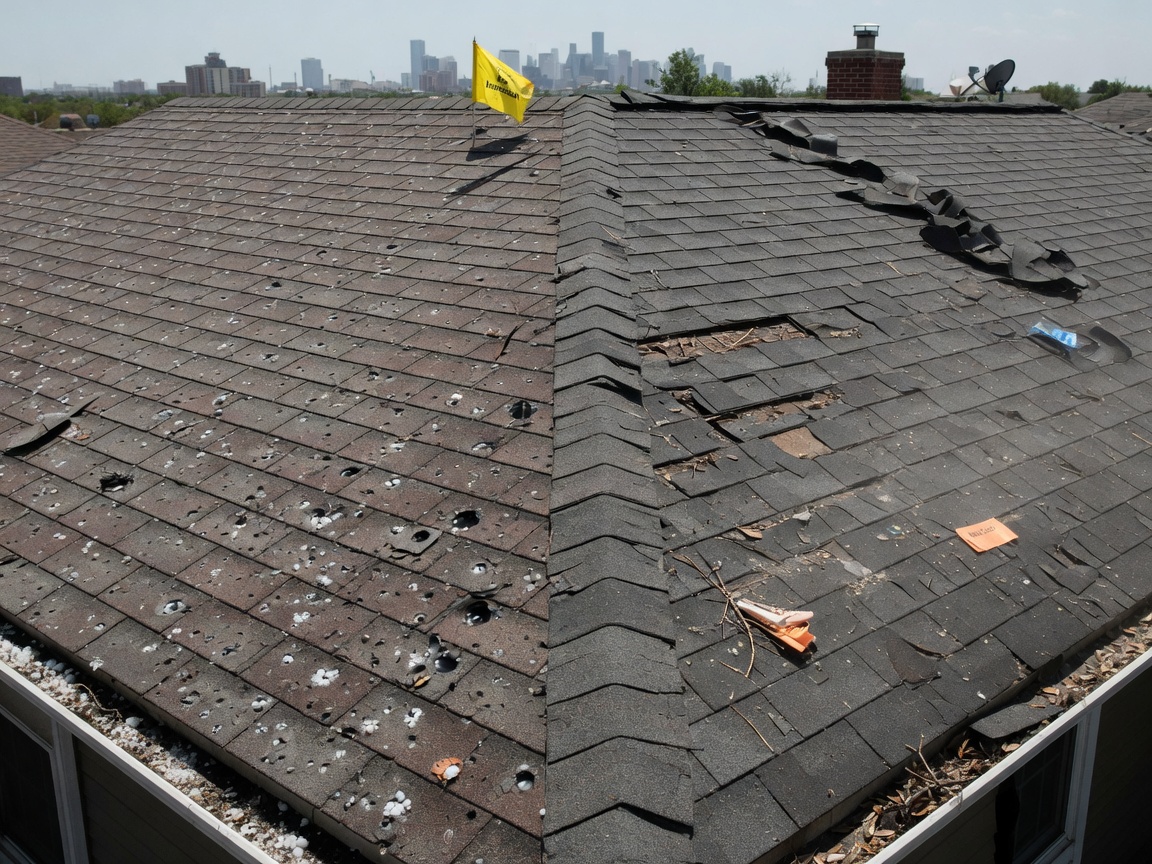
When a storm rolls through Houston, especially in areas like Montrose, River Oaks, or even out towards Katy and Sugar Land, homeowners often wonder if their roof sustained hail or wind damage. While both can necessitate a <a href="/services/storm-damage-roof-repair">storm damage roof repair</a>, the key differences lie in their visual indicators, the way they impact various roofing components, and how insurance companies typically assess claims. Hail damage often presents as direct impact marks, bruising, or granule loss across the roof's surface, while wind damage is more frequently characterized by missing, creased, or lifted shingles, particularly on the edges and ridges. These distinctions are critical for a proper assessment and successful claim, as the nature of the damage dictates the repair strategy and often influences the insurance adjuster's evaluation.
Understanding Hail Damage on Houston Roofs
Hail damage in Harris County, whether it's a quick summer pop-up storm or a more severe system, typically results from ice projectiles striking the roof surface. The size of the hailstones directly correlates to the severity of the impact, ranging from pea-sized hail that might cause minor granule loss to golf ball-sized hail or larger that can create significant indentations and even crack shingles. For asphalt shingles, hail damage often appears as random impact marks, which can be circular or irregular depressions. These impacts can dislodge the protective granules, exposing the underlying asphalt mat to the sun's UV rays, accelerating its deterioration. You might see shiny black spots where granules are missing, or even soft spots on the shingle where the mat has been bruised. This type of damage is often widespread across the roof, affecting various slopes and aspects equally, unless one side was more exposed to the hailstorm's trajectory. Even without immediate leaks, this granule loss can significantly shorten your roof's lifespan, making a <a href="/services/hail-damage-roof-replacement">hail damage roof replacement</a> a necessary consideration.
Identifying Wind Damage on Houston Roofs
Houston's tropical storms and strong thunderstorms, common from Downtown to Pearland, bring significant wind gusts that can wreak havoc on roofing systems. Unlike hail, wind damage is often more directional and concentrated. The most common signs of wind damage include missing shingles, especially along the eaves, rakes, and ridge lines where the wind can get underneath and lift them. You might also observe creased or torn shingles, where the wind has bent them back, breaking the sealant and potentially the shingle itself. Another tell-tale sign is lifted or curled shingles, where the adhesive bond has failed due to persistent wind pressure, allowing water to penetrate underneath. Wind damage can also affect other roof components like <a href="/services/hail-damaged-gutters">gutters and downspouts</a>, tearing them away from the fascia. The damage tends to be more prevalent on the windward side of the house or on specific slopes that were most exposed to the storm's direction. It's less about impact and more about the sheer force of the wind pulling and tearing at the roof's integrity.
Visual Discrepancies: Hail vs. Wind
When assessing your roof after a storm, especially in neighborhoods like the Heights or Midtown, the visual cues for hail and wind damage are distinct. Hail damage often leaves behind circular indentations or bruises on shingles, sometimes with a 'splatter' pattern if the hail was particularly large and soft. These impacts are generally scattered across the roof surface, irrespective of the shingle's orientation. You might also notice damage to other soft metals on the roof, such as vents or flashing, which will have dimples or dents. In contrast, wind damage typically manifests as straight-line tears, creases, or missing sections of shingles. The damage is usually concentrated where the wind could exert maximum uplift pressure, such as along the roof's edges or around protrusions. You might see entire strips of shingles gone, exposing the underlying decking, or shingles that are bent upwards, showing the underside. The presence of debris, such as tree limbs or fences blown over, can also be a strong indicator of significant wind activity.
Insurance Claim Considerations for Each Damage Type
Navigating insurance claims for roof damage in Houston can be complex, and understanding the nuances between hail and wind damage is crucial. For hail damage, insurance adjusters will look for widespread, random impact marks and granule loss. They often use a test square method to determine if there's enough damage to warrant a full roof replacement. Documentation, including photographs of individual hail impacts and damaged soft metals, is vital. For wind damage, adjusters will focus on the extent of missing or compromised shingles, often requiring proof that the damage was directly caused by a specific wind event rather than general wear and tear. They may also consider the age of the roof and its condition prior to the storm. It's important to remember that most policies cover sudden and accidental damage from named perils like hail and wind, but policies can differ. Having a thorough <a href="/services/hail-damage-roof-inspection">hail damage roof inspection</a> by an experienced local operator before contacting your insurance company can provide you with a clearer picture of the damage and help streamline the claims process.
Repair and Replacement Strategies
The repair strategies for hail and wind damage also differ significantly. For minor hail damage, especially if it's limited to granule loss without significant bruising, sometimes a spot repair or shingle replacement might be possible, though often, widespread hail damage necessitates a full roof replacement to maintain the roof's integrity and warranty. This is particularly true if the hail has compromised the shingle mat or is causing widespread <a href="/services/hail-damage-granule-loss">granule loss</a>. For wind damage, if only a few shingles are missing or creased, a targeted repair can often suffice, replacing just the damaged sections. However, if the wind has caused extensive shingle loss, lifted large sections, or compromised the underlying decking, a full roof replacement becomes the most practical and durable solution. In Houston's climate with its hot, humid summers, ensuring your roof is fully sealed and intact is paramount to prevent leaks and further structural issues. Always consider the long-term implications of any repair, especially for older roofs that might be nearing the end of their lifespan, as discussed in our article on <a href="/blog/cost-factors-for-hail-damage-roof-replacement-in-houston-neighborhoods">Cost Factors for Hail Damage Roof Replacement in Houston Neighborhoods</a>.